
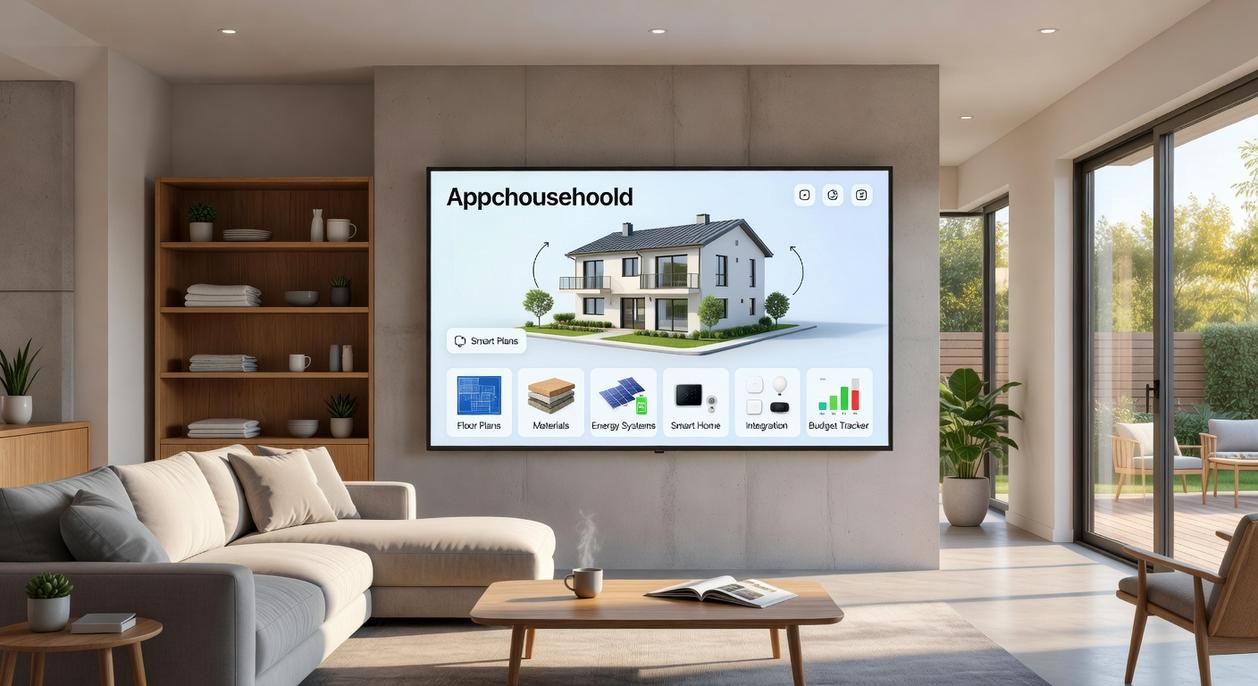
I’ve seen too many home builds fall apart because people tried to manage everything with spreadsheets and text messages.
You’re building a house. You need to track your budget, coordinate contractors, make a thousand decisions, and somehow keep everything on schedule. It’s a lot.
Most people realize too late that they needed a better system. The budget creeps up. Deadlines slip. Important details get lost in email chains.
A home building appchousehold changes that. It puts everything in one place where you can actually see what’s happening with your project.
I analyzed hundreds of residential construction projects to figure out what separates the organized builds from the disasters. The difference always comes down to having the right tools.
This guide shows you how to use a dedicated application to manage your build. You’ll learn what features actually matter and how to keep your project on track and on budget.
No construction management degree required. Just a clear system that works.
Why Spreadsheets and Notes Apps Fail for Home Building
You start with good intentions.
A clean spreadsheet. Maybe a notes app on your phone. You tell yourself you’ll stay organized this time.
Then week three hits and you’ve got 47 browser tabs open, six different Excel files (which version was the latest again?), and a text thread with your framer that’s 200 messages deep.
I see this all the time with custom builds here in Central Florida. Someone decides to tackle is a garage shed worth it appchousehold and figures a spreadsheet will do the job.
It won’t.
The Problem with Manual Tracking
Spreadsheets break down fast when you’re managing a build. You update the plumbing costs on your laptop but forget to sync it. Your partner makes changes on their phone. Now you have two versions and neither one is right.
And errors? They multiply like rabbits in August.
One wrong formula and suddenly your budget is off by $12,000. You don’t catch it until the tile guy asks for payment and the numbers don’t match.
Real-time collaboration doesn’t exist in Excel. Someone’s always working off old data.
But here’s what really kills projects.
You can’t see the big picture. No Gantt chart means you miss that your electrician can’t start until framing wraps. So he shows up, bills you for the trip, and leaves (that’s a $400 lesson you only learn once).
Then there’s the communication nightmare. Your architect emails the revised plans. The contractor texts about the lumber delivery. The county inspector leaves a voicemail about the permit. Your receipts are in three different apps.
Good luck finding anything when you need it.
What you need is one place. ONE. Where everything lives for your home building appchousehold project.
Plans. Budgets. Messages. Receipts. Change orders.
Without that single source of truth, you’re just guessing.
The 5 Must-Have Features in a Home Building Application
You’re about to build a home.
And someone just told you that you need an app to manage it all.
But when you start looking, you realize something. Every app claims to do everything. They all promise to make your life easier.
Here’s what nobody tells you.
Most home building apps are bloated with features you’ll never use. Or they’re missing the one thing you actually need when you’re standing on a job site at 7 AM trying to figure out why your framer didn’t show up.
I’ve tested dozens of these tools. Some were great. Most were garbage.
What I found is that you don’t need 50 features. You need five that actually work.
Let me break down what matters.
Comprehensive Budget & Expense Tracking
This isn’t about a simple spreadsheet that adds up numbers.
You need to see where every dollar goes. That means categorizing expenses against specific budget lines (framing, electrical, plumbing). It means tracking change orders when your contractor says “Hey, we found something in the wall.” And it means managing payments so you know exactly who got paid and who’s still waiting.
Without this, you’re guessing. And guessing with a six-figure budget is how people go broke.
Dynamic Project Scheduling
A visual timeline matters more than you think.
I’m talking about a Gantt chart or something similar where you can actually see your project. You should be able to set task dependencies (because you can’t install drywall before electrical is done). You need to assign resources. And when your HVAC guy gets delayed two weeks? You need to adjust dates without rebuilding your entire schedule.
Centralized Document & Photo Management
Here’s where most people lose their minds.
Permits are in your email. Architectural plans are on your laptop. Contracts are in a folder somewhere. Progress photos are on your phone.
A good home building appchousehold puts all of that in one place. Organized by task or project phase. So when your inspector asks for that permit you pulled three months ago, you can find it in 30 seconds instead of 30 minutes.
Task Management & Daily Logs
This is simpler than it sounds.
You need to create to-do lists. Assign tasks to people (your contractor, your electrician, yourself). And keep a daily log of what happened on site.
Why? Because three weeks from now when something goes wrong, you’ll need to remember what was happening on October 15th. Your memory won’t cut it.
Integrated Communication Hub
Text messages get lost. Emails pile up. Phone calls disappear into the void.
What you need is a messaging system inside the app that links conversations to specific tasks or budget items. So when your contractor says “We talked about this,” you can pull up the exact conversation where you discussed changing the countertop material.
It creates a searchable record. Which is worth its weight in gold when disputes come up (and they will).
These five features aren’t fancy. They’re practical. And if the app you’re looking at doesn’t have all of them working smoothly together, keep looking.
How to Choose the Right Application for Your Project’s Scale
Not all home building apps are created equal.
I’ve seen too many people download the first app they find, only to realize three weeks in that it doesn’t do what they actually need. Then they’re stuck migrating data or starting over.
Here’s how I think about it.
If you’re an owner-builder doing this yourself, you need something dead simple. I’m talking about an app you can figure out in five minutes without watching tutorial videos. The mobile interface matters more than anything else because you’ll be on site taking photos, checking off tasks, and updating your timeline while standing in the middle of construction chaos.
Desktop features are nice. But if the mobile experience is clunky, you won’t use it.
When you’re working with a general contractor, the game changes completely. Now you need collaboration tools that actually work. I mean real permission settings, not just “share with everyone and hope for the best.” Your contractor should be able to update their progress. Subs need access to their specific tasks. And you need to approve selections without playing email tag for three days.
The home building guide appchousehold covers this in more detail, but the short version is this: if the app makes collaboration harder instead of easier, it’s the wrong app.
Now let’s talk money.
Most apps fall into three camps. Free versions with limited features. Monthly subscriptions that add up fast. Or one-time project fees that seem expensive upfront but might save you money on a long build.
Here’s my take. For a quick three-month renovation, monthly subscriptions make sense. For a year-long custom build, I’d rather pay once and be done with it. Do the math based on your actual timeline, not your hopeful timeline (because projects always run longer than you think).
And whatever you do, use the free trial. I don’t care how good the marketing looks. Test it with your real project data before you commit.
Implementation: Your First Week with a Home Building App
You downloaded the app. Now what?
Most people open it once, get overwhelmed by all the features, and go back to their spreadsheets and text messages.
I’ve seen it happen dozens of times.
But here’s what I tell everyone who asks me about getting started with a home building appchousehold. You don’t need to master everything on day one. You just need a plan for your first week.
Some builders say apps overcomplicate things. They argue that a simple notebook and phone calls work just fine. And sure, if you’re building a single room addition, maybe that’s true.
But when you’re managing a full home build? That approach falls apart fast.
Day 1 is about the money. Input your total budget first. Then break it down into the big categories like foundation, framing, and electrical. Upload your architectural plans and permits while you’re at it. This gives you a baseline to work from.
Day 2 focuses on time. Build out your master schedule with major phases and milestones. Don’t get caught up in every tiny detail (you’ll add those later). Just map out the big picture so you can see the whole project at a glance.
Day 3 is when things get real. Invite your general contractor or primary trade partner into the system. Walk them through it. Make it clear this is how you’ll communicate going forward. No more lost text threads or forgotten voicemails.
Days 5 through 7 are about building the habit. Create tasks for the upcoming week. Upload your first expense receipts. Post a daily log with photos of the work site.
The key is consistency. Use it every single day, even if just for five minutes.
Because here’s what happens when you do this right. By week two, you’re not thinking about the app anymore. You’re just tracking your build naturally while the system keeps everything organized in the background.
Build Smarter, Not Harder
You came here to figure out what a home building application actually does and how to pick the right one.
Now you know.
Building a home is already complex enough. You don’t need the added stress of missed deadlines, budget overruns, and disorganization making it worse.
That’s completely avoidable.
A dedicated home building appchousehold gives you the structure you need. It brings clarity to the chaos and puts you back in control of your project and your budget.
Here’s what to do next: Pick two or three applications and evaluate them using the feature checklist from this guide. Compare them side by side. See which one fits your specific project needs.
The right tool makes all the difference between a project that drags on and one that stays on track.
Stop letting disorganization cost you time and money. Find your application and start building with confidence.
 Jacek Gorsasz